Can DOE Regulate Water Use Without Congress?
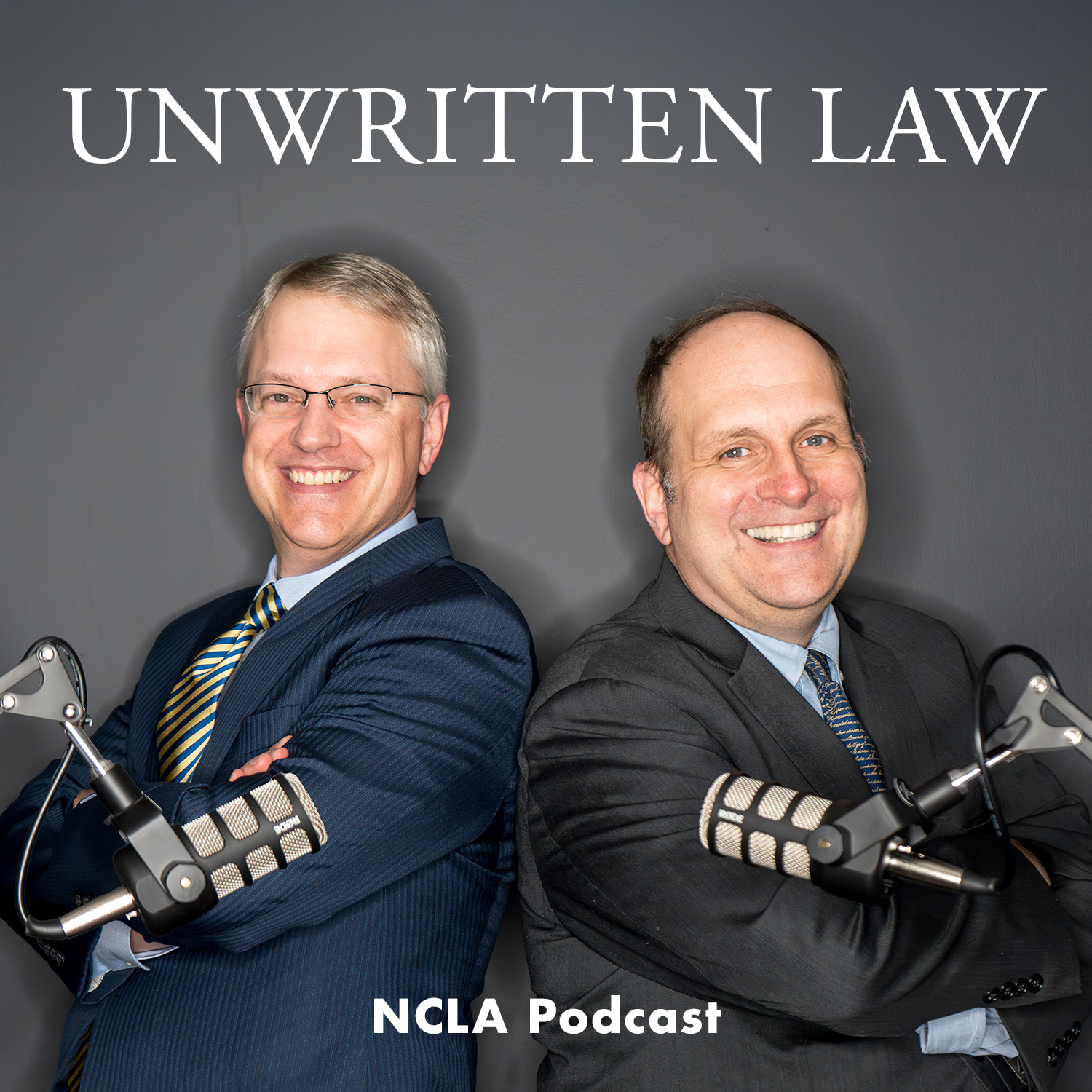
In this episode of Unwritten Law, NCLA President Mark Chenoweth and Senior Litigation Counsel John Vecchione discuss John’s recent oral argument at the U.S. Court of Appeals for the Fifth Circuit in Word v. Department of Energy.
Bill Word and David Daquin both own a dishwasher and a washing machine that they want to replace. The U.S. Department of Energy has imposed regulations in 2012 and 2024 illegally limiting how much water dishwashers and washing machines can use. The appliances Word and Daquin want to buy use more water than those regulations allow. But under the amended Energy Policy and Conservation Act of 1975, the Department of Energy can only regulate water use in “faucets, showerheads, water closets and urinals”.
The conversation also explores a key procedural question: where regulated parties can seek meaningful relief when an agency repeatedly issues unlawful rules, and whether district courts must be able to issue injunctions to stop ultra vires agency action. Along the way, Mark and John reflect on the Fifth Circuit’s prior rulings, post-Loper Bright limits on agency power, and why congressional action—not bureaucratic improvisation—is the proper way to regulate.
Transcript
Mark Chenoweth: Welcome to Unwritten Law with Mark Chenoweth and John Vecchione. John is just back in the studio, fresh off of a couple of oral arguments, but we’ll just talk about one of them today. John, you argued the Word v. Department of Energy case at the U.S. Court of Appeals for the Fifth Circuit in New Orleans. I’m so sorry you had to go down there for the 65-degree weather while we’re all freezing our butts off here in Washington D.C. But how did it go, John?
John Vecchione: Yeah, not only the weather, but the food.
Mark Chenoweth: Oh, yeah, well, rub it in.
John Vecchione: It was pretty rough.
Mark Chenoweth: Yeah.
John Vecchione: But I endured. So, we did head down to New Orleans, to the Fifth Circuit. And our panel was Kyle Duncan, Judge Jones, and Judge Douglas. I like –
Mark Chenoweth: Can we take a step back and tell people what the case is about because –
John Vecchione: I will. I’m about to, but I just wanted to say that Duncan, Jones, and Douglas – it’s very easy to remember everybody’s name in that panel is all I have to say. I was not dealing with Chouflad or any hard-to-spell name.
Mark Chenoweth: That’s right. That’s right. You didn’t have to buy a vowel?
John Vecchione: Exactly. I didn’t have – but, this case is a case we took over from CEI. Our friend, Devin Watkins, had written the briefs. And the case is interesting because it has to do with the Department of Energy’s ability to regulate energy and appliances, which we don’t dispute. CEI didn’t dispute it. What happened is, in the Power Act, they said that the Department of Energy can say how much energy each appliance can use. And they did not say dishwashers and washing machines were originally there. Right?
So, they weren’t originally one of them. But eventually Congress put those in. They also said the Department of Energy could regulate water flow in four things: the showerheads, faucets, water closets, and urinals. Right? And those four things are even how they define water flow. How much water flows through the showerheads, faucets, water closets, and urinals? But when they amended for dishwashers and washing machines, the DOE – the Department of Energy – said, “You know, we’re allowed to regulate water flow as well.”
Because Congress had, in that same time, statutorily said what the highest limit of water in those devices could be used. So, no one’s challenged that. What Congress said, no one’s challenging. But what the Department of Energy decided to do was say, “Hey, since they’ve allowed us to regulate that and they did mention water, we can regulate the water flow there.”
Mark Chenoweth: One and one is three.
John Vecchione: Correct. So, Bill Word and David Daquin have washers and dishwashers and they want more water flow because – as the Fifth Circuit has already held – when the first time they tried this, the government didn’t take into account the fact that people keep reusing them ‘cause they don’t wash as well.
Mark Chenoweth: They don’t work at all.
John Vecchione: Right.
Mark Chenoweth: These new washing machines are terrible. I hate them.
John Vecchione: Or they go and they wash them by hand, which uses – everyone agrees – uses more water than anything. Right? So…
Mark Chenoweth: Well, we have to now ‘cause there’s some stuff that we put in the dishwasher that just won’t get rinsed.
John Vecchione: Correct.
Mark Chenoweth: So, you just don’t put it in there. You do them by hand instead. Ridiculous.
John Vecchione: So, what’s happened is – so, in any event – but the real answer here is, is that the Department of Energy wasn’t given this power. They never changed what devices the Department of Energy could regulate the water flow in. And they have just glommed on to this. But the question then became, “Well, what do you do about it?” And our answer – and CEIs answer – was well, they say that they issued this under the statute that allows them to make a regulation and then it gets – you do a petition directly to the circuit. Okay?
it twice now. They did it in:Mark Chenoweth: And you don’t want them to put out even worse regulations a couple more years from now.
John Vecchione: Because all you’re doing is playing whack-a-mole. Even if you get a set-aside. So, we wanted an injunction. And so, we said it was ultra vires, against the law, and that the statute says that all – everything we give you in this statute is in addition to the right you already had. And you had an ultra vires action, a common law, against the government when they did something like this. So, that’s our argument. Our argument is that it should be in the district court and that the district court saying that this had to go back to –
Mark Chenoweth: Let me just put a fine point on that. So, what the government is saying is, “You sued us in district court. That’s wrong. You had to sue us directly in the Fifth Circuit. You didn’t do that, so you lose.”
John Vecchione: Well, we did that, too, to belt and suspenders it. But that stayed while we do all this.
Mark Chenoweth: I see.
John Vecchione: So, that’s what the argument is: where should it be and what kind of relief can you get? Because the statute does say that all your relief is preserved, but it is unclear in the Fifth Circuit – and I think everywhere and we – I’ll get to the argument now. So, both I and the government lawyer had taken over this case from other people. So, neither of us had done the briefing and we were kinda laughing about that beforehand. But one thing neither of us – Judge Duncan was very – he says, “Well, why can’t we do everything? Why can’t we just do everything?”
And I said, “Well, you know that there’s disputes even here in the Fifth Circuit about what the APA allows as far as relief goes. And there’s no dispute under what an ultra vires claim allows, and we can do that.” And I said, “I don’t think my friend on the other side is gonna disagree with me that at least it’s unclear. I think that if you rule that we can get all the relief we’re asking for, we still think it should be in the district court, but that wouldn’t be the worst thing in the world, right?”
And the other question was – and I got this from Judge Douglas. She says, “Well, didn’t we already rule that their regulations in this area are arbitrary and capricious? And, in fact, didn’t we also say that they weren’t allowed to regulate water in these appliances?” – which they did, but it was dicta. It was dicta was the answer.
Fifth Circuit is [inaudible] [:Mark Chenoweth: Once is once too many, John.
John Vecchione: And the government said, though, the government said that this regulation, even if they’re wrong, they should be in the appellate court. And I said under Loper Bright, the first thing that the panel is supposed to do is see what is the remit of the agency. And the agency – if you’ve already said and we know that they can’t issue a regulation about water flow through these devices, then only those regulations are appealable here. Things that are not regulations – we’re not arguing about whether something’s arbitrary, capricious, or reasonable. It’s no words like that that we’re arguing about. We’re arguing about if you can even do that.
And I said to them, I said, “What if they wanted to – what if they thought there was too much water going through the super soakers?” And the Department of Energy says, “You know what? We don’t like those kids using this much water in the super soakers.” I said, “Would I have to come up here to a three-judge panel? It would be so outrageous that of course I could go and get an injunction in the district court.” And Duncan asked, “Well, why? Why would you want to go there?” And I said, “Well, it’s faster.” And he says, “Wait a minute. Not all district judges are faster than us.”
Mark Chenoweth: In fairness.
John Vecchione: It’s fairness.
Mark Chenoweth: I could think of one particular district judge in the Fifth Circuit who’s not very fast, but…
John Vecchione: So, it was lively. The government said, “Look, we have the right to do this. And, in fact, we’ve remanded it. We’re looking at whether or not the regulation should stay in place.” Well, here’s the thing: in the regulation where they say, “We’ve gotta take a look at this,” they say, “We don’t think we can regulate water flow through these.” So, they’re fighting like mad to keep us out of the venue we want. But it isn’t clear to me that they disagree with our position. So, this is the sort of thing, I think, drives normal people who aren’t lawyers nuts. But that’s where you had it.
Mark Chenoweth: What a good use of taxpayer dollars, John.
John Vecchione: Exactly. But I thought it was a good argument. I think the judges know – boy, they knew all the cases. They knew what they’d said before. They knew the Supreme Court cases that we were relying on. And the government – I think very fairly – said, “We don’t think you can – you have the power to do these injunctions.” So, they didn’t say, “Oh, yeah, you can do it.” So, I think that we’ll get a ruling. I hope that they’ll say something because – since we do have a petition to the Fifth Circuit – if they do think that it’s the wrong venue, I hope they say, “And we have these powers,” so that when we’re before the next panel, we can just use that.
So, we’ll see what happens. I think it’s a very interesting case. I think that the Congress has shown since it’s amended this three or four times, expanding the amount of appliances and also, you know, deciding amongst themselves what the water limit should be. I think that they’ve shown that in this area there seems to be the ability to amend the statute. So, there’s even less of this, “Oh, only the administrative agencies can do this,” because Congress actually did do the water flow. It actually did put different devices on there.
And the last thing – I’ll just tell you for all you folks who are lawyers out there – we had done moots. We’d looked at all this stuff. And, just that morning, I decided to look through again and I looked through the government’s papers and they had attached the amendment that had the dishwashers and the washing machines. And I’d read it at least half a dozen times, but what did I see, but they also added one other thing. They added fluorescent ballast lamps. And I went, “What is that?” So, I went and looked it up and it is the heavy thing at the bottom of lamps that, apparently, sends the energy up. And some of them are fluorescent, apparently.
None of them use water. None of them. So, our government was arguing that, because they amended and put these in and they both use water, but the third one doesn’t use water. So, it could not be. So, I’m hoping the judges, they seem to like that point. But it does tell you that all that last-minute worrying you do sometimes pays off because I thought it was something that I hadn’t really thought about. And I don’t think the government thought about it. And it’s just came to me, “Well, what is a fluorescent ballast lamp?”
Mark Chenoweth: Well, it’s a great argument, or it’s a great point, sorta practitioner’s point for young lawyers out there. If there is something in your case you don’t know, get to the bottom of it before you get in front of the judges. Because it might help your case.
John Vecchione: Yup. And it did and it was just that morning. So, I think it went well. You know, you can always lose. So, we’ll see what happens. But I thought it was useful. And I thought it was useful oral argument, too. You know, we always ask for it and there’s all this dispute of whether or not it’s useful or not. But I think it was useful for the judges.
Mark Chenoweth: Well, terrific. Well, the case is Word v. Department of Energy. John Vecchione has an excellent track record at the Fifth Circuit, so I like your chances. Thanks for going and doing the hard work of enjoying the weather and eating the good food in New Orleans, and presenting in front of a Jones, Duncan, and Douglas panel. We’ll keep people informed about what happens with that case. You’ve been listening to Unwritten Law.
[End of Audio]
Duration: 13 minutes