CAT’s Out of Cash: SEC’s Surveillance Scheme Suffers a Legal Blow
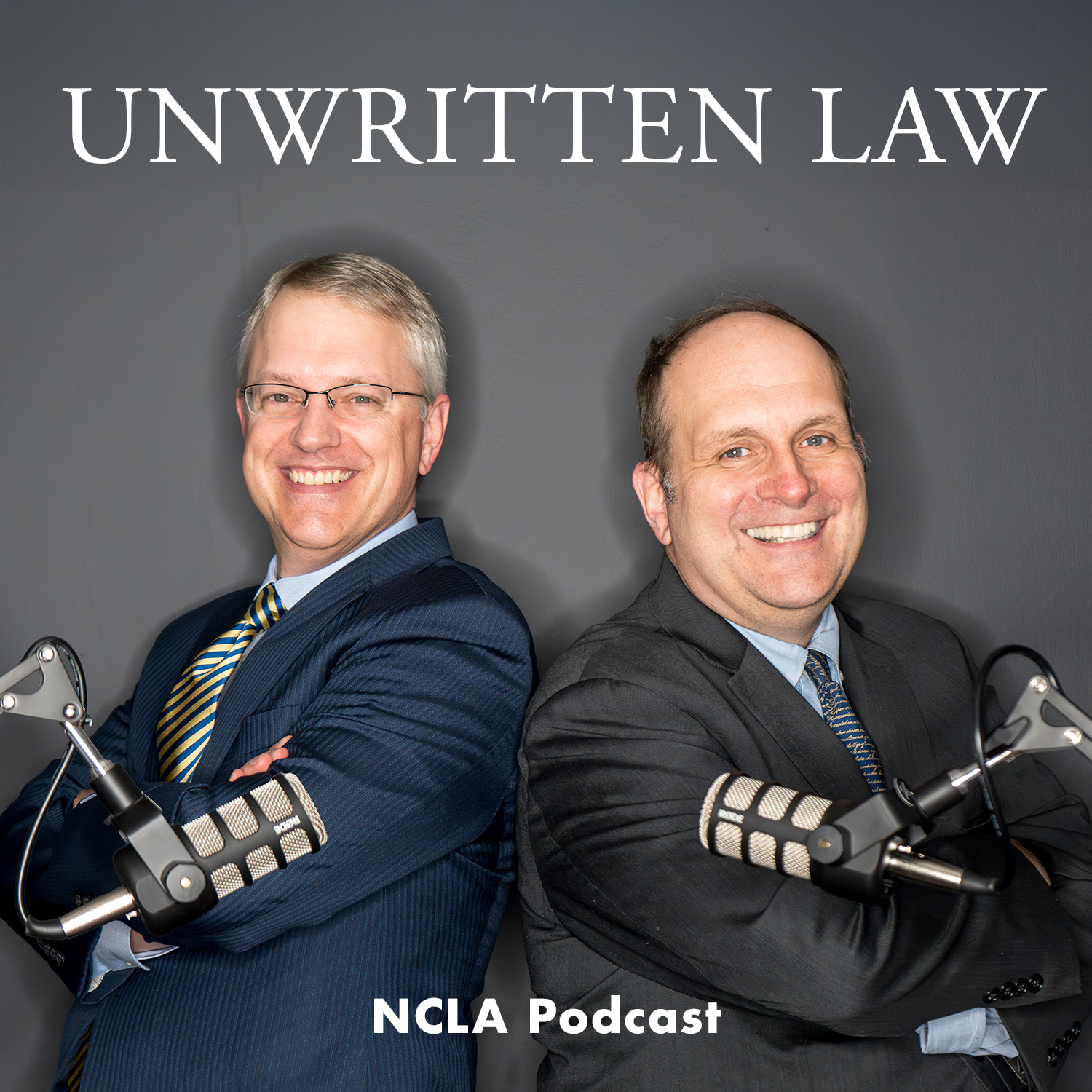
In this episode of Unwritten Law, Mark Chenoweth and John Vecchione unpack a major federal court ruling that struck down the SEC’s funding mechanism for its mass surveillance program—known as the Consolidated Audit Trail (CAT).
The 11th Circuit agreed with the American Securities Association and Citadel that the SEC's attempt to impose multi-billion-dollar fees on broker-dealers was arbitrary, capricious, and totally untethered from Congressional authorization.
Mark and John break down how this massive Fourth Amendment–invading program was never passed by Congress, never properly funded, and yet was still collecting every American investor’s stock transaction.
They also discuss NCLA’s companion case, Davidson v. SEC, which challenges the CAT’s very existence—and what this win means for reining in agency power, restoring constitutional order, and stopping self-funded surveillance regimes.
Keywords: SEC surveillance, Consolidated Audit Trail, CAT, Davidson v. SEC, Fourth Amendment, administrative state, unlawful taxation, 11th Circuit opinion, American Securities Association, Citadel, pro-liberty legal podcast
Transcript
Mark Chenoweth: If you think that unwritten law doesn’t affect you, think again. Whether you’re a business owner, a professional, just an average citizen, you are unknowingly going to fall under vague and unofficial rules. And when bureaucrats act like lawmakers, they’re really restricting your liberty without the consent of the governed.
Welcome to Unwritten Law with Mark Chenoweth and John Vecchione. John, we got a nice amicus win earlier this month in a case out of the Eleventh Circuit Court of Appeals — American Securities Association and Citadel Securities LLC versus the U.S. Securities and Exchange Commission. This case was about the Consolidated Audit Trail, and before anybody tunes out, this is maybe the most important thing that NCLA is fighting right now. I mean, the Consolidated Audit Trail is a database that FINRA and the SEC have cooked up that has every single American investor’s stock transaction data in it, so this is a massive database, a massive Fourth Amendment violation. I know that gets under your skin, John.
John Vecchione: Yes, I do not like the panopticon.
Mark Chenoweth: But this case didn’t involve… so the NCLA is suing over that down in Texas in Federal Court. This case didn’t go into the question entirely of whether the whole thing needs to be thrown out, but as befits a trade association like the American Securities Association. They were complaining about how the SEC is paying for this and said that the manner in which they are charging the broker/dealers was arbitrary and capricious. And by gum, John, the Eleventh Circuit agreed with them.
John Vecchione: Yes, and so they… which does get rid of the CAT for now, right?
th: It certainly vacates the:John Vecchione: Maybe. That’s what it means, I mean, if they stayed it. And I suppose they did that so the Supreme Court could be petitioned.
Mark Chenoweth: Yeah, I assume that that’s right… that they probably anticipate that the SEC would want to seek an appeal or --
John Vecchione: Do you know how much money we’re talking?
Mark Chenoweth: Millions and millions of dollars. I know that the total cost of the CAT is in the billions and that it’s – one of the things that really… it’s a multi-billion-dollar exaction that we’re talking about here. I don’t know how much it is per year, and the… I know that one of the things that bothered the court, and one of the reasons they said that it was arbitrary and capricious is that apparently the total is something like eight or ten times what the estimates were.
John Vecchione: Oh, my.
Mark Chenoweth: So, they’ve just completely blown the cost out of the water, and so I think that’s part of the problem that the SEC has here. The other problem is that the SEC has no statutory authority whatsoever to do what they’re doing.
John Vecchione: Right. And that’s our case, we have Davidson v. Atkins, right?
Mark Chenoweth: That’s right.
John Vecchione: And in our case, which has been… which I think is stayed right now…
Mark Chenoweth: It’s being held in abeyance.
[Crosstalk]
Mark Chenoweth: It’s my least favorite word of the year.
John Vecchione: Exactly. But we attacked the CAT route in Branch for the reason that there’s no Congressional authorization. This is another one of these things that the agencies dream up that they want to do, and then they decide they’re going to tax the regulated. Sounds a lot like Relentless and Loper Bright to me, right?
Mark Chenoweth: It does. It does.
John Vecchione: But on a massive scale. Massive.
Mark Chenoweth: Well, if what was allowed in Relentless is legal the way the First Circuit said, then this would be, too.
John Vecchione: The way Judge Smith recently said.
Mark Chenoweth: Yeah.
John Vecchione: Yeah, exactly. And it cannot be that they dream up these huge programs that Congress doesn’t fund or create or even have to know about. Maybe they do reports — I don’t know, but I don’t think that there should just be a machine that goes by itself to go around taxing people for programs they like and Congress hasn’t invented. I mean, it’s crazy.
Mark Chenoweth: Especially if it violates your Fourth Amendment rights.
John Vecchione: Yes!
Mark Chenoweth: The other thing is Congress would never pass this, John. I firmly believe that, that if this program were put in front of Congress, it could not get a majority vote in either house.
John Vecchione: Yeah, even without the filibuster. I agree with that. And so, they just say “All right, this is what we’re gonna do and you’ll just have to stop us, but of course we have all these administrative rulings that we’re allowed to do it.” And here, there’s just not any authorization for this. And the fact that they have to charge so much money sure does sound like an appropriations problem to me for a whole new program, a vast program as you said, how much it’s going to cost. It strikes me that that’s something Congress should be involved in and not the agency self-funding itself.
Mark Chenoweth: Especially, this is bigger than the entire budget of the SEC.
John Vecchione: Wow.
Mark Chenoweth: By a lot.
John Vecchione: I had missed that.
Mark Chenoweth: Yeah.
John Vecchione: That’s outrageous.
Mark Chenoweth: It is outrageous. My only concern is the Supreme Court just upheld the USF at the FCC which has that same feature — the size of the Universal Service Fund over at FCC is larger than the FCC’s annual budget, and the Supreme Court said “Oh well, you know.” Congress did not approve that.
John Vecchione: Congress was involved.
Mark Chenoweth: Congress was involved in that. You’re absolutely right.
John Vecchione: All right, so I can’t — you can fault it for the delegation, but I don’t think you can say Congress didn’t know what was going on.
Mark Chenoweth: That’s right.
John Vecchione: They said “Go forth and do this.”
Mark Chenoweth: Yeah.
John Vecchione: And we said “No, you can’t,” and the Supreme Court said “Yes, you can.”
Mark Chenoweth: That’s right. That’s not one where Congress…
[Crosstalk]
Mark Chenoweth: I can’t say Congress wouldn’t have supported it, ‘cause they did.
John Vecchione: They did. But here, Congress hasn’t done anything to do this, this is SEC acting on its own. And I think that adds a wrinkle to these type of cases when a massive, massive program is created and then funded, all without a buy or leave from Congress and the representatives. When did these broker/dealers get to say “We think this new program isn’t worth it, and Congress could you not pass it?” Nah, they didn’t get a chance.
Mark Chenoweth: Never. And that makes this CAT scarier, you might say, than the FCC program. So, where does that leave us, John? As far as I know, this is going to continue going. It will be going, I guess, unfunded because there is no other source of funding for it. So, where are they going to come up with the money to protect everybody? I assume it costs money for these servers, and it costs money for stopping the hacking and all these sorts of things.
John Vecchione: Sure, you know, I have to think just because I have my own website and email that you’ve got to pay somebody. You know, every month you’ve got to pay them. And so, I do think that they’re going to have to get it from somewhere, and you know, maybe there’s some give in the budget, but it strikes me that this was an awful lot of money to just lose. And that’s why I asked the question at the beginning: does this end the CAT? It strikes me -- they don’t have to destroy their records, right, of all the stuff they’ve gathered, which I think is something we’re trying to do.
Mark Chenoweth: Yeah, we have asked for that.
John Vecchione: Right. And so, there’s still the danger of hacking and all the rest of it. Maybe there’s more danger of hacking now.
Mark Chenoweth: Could be, for sure.
John Vecchione: But it is just a disaster waiting to happen. And the fact that they felt empowered to do this is disheartening because you’d think they would have turned back by now, but nope.
Mark Chenoweth: Well, I certainly think this decision makes a good start on putting paid to the SEC’s unlawful CAT regime. Now, it would be useful if the Davidson court weren’t in abeyance. Maybe we should go back to the Davidson court and say “Hey, now that there’s been this major development and the thing’s not being funded anymore, maybe let’s not let it kick around for another six months without getting a ruling on this other piece of it.” I don’t know if the court would be open to that.
John Vecchione: Well, not during August, they won’t.
Mark Chenoweth: That’s right. If you want them to come back from the lake, that’s not going to happen. Yeah, no you’re probably right about that. So, a good decision from the Eleventh Circuit, so they’ve stayed it for 60 days. I guess that we’ll see maybe a cert petition, but maybe we won’t. And that’s the other thing, what if we don’t see an appeal from the SEC?
John Vecchione: I don’t know. The SEC has its own lawyers, but for petitions to the Supreme Court it has to go through a Solicitor General. I’m not sure that he’s going to be all gangbusters about this program, or about this legal position, or about any of it.
Mark Chenoweth: Yeah, I can’t imagine that he would be either, but then that sort of puts the -- let’s assume 60 days from now, we’re at the end of September, if there’s no cert petition filed, well then where are we? You’ve got this unfunded program continuing to flop around like a almost-dead fish. That seems like a problem.
John Vecchione: Yeah, it is, and I just don’t know what happens.
Mark Chenoweth: Yeah. Well, I know that… so the reason that the Davidson v. Atkins case has been held in abeyance is basically because it’s not Davidson v. Gintzler anymore. We’ve got Chairman Atkins in there, who… the representation to the court was look, we want to fix this thing. Now, I think our position is well wait a minute, there’s no statutory authority for it — there’s nothing that they can do other than dismantle the entire thing that’s going to satisfy our statutory objections that we’ve made. So that’s why we didn’t think that the court should allow their motion to hold it in abeyance. But they are, obviously, going to have to do something in response to this loss at the Eleventh Circuit. There’s more than one way to skin a cat. Maybe taking away all of its funding is going to get the job done. I don’t know.
John Vecchione: Yeah. Have to go out in the wild and bring back mice.
Mark Chenoweth: Well, anyway, this certainly would encourage folks to go read the decision — American Securities Association and Citadel Securities LLC versus the U.S. Securities and Exchange Commission. Very nice decision from the Eleventh Circuit. I don’t have the judges in front of me here for the panel, John, but if I did, I would complement them because it was a nice decision, and I think is the right decision in terms of the funding for this.
John Vecchione: Yeah, and one thing, a shout out to the APA here, we often… we want things on a constitutional basis, but the APA and arbitrary and capricious standard has stopped a lot of bad things. And that was a congressional enactment that has paid off for the American people for a long time.
Mark Chenoweth: Good point, John. And we’ll leave it there. Thank you for listening to Unwritten Law. As we like to say here at NCLA, “Let judges judge, let legislators legislate, and stop bureaucrats from doing either.”
[End of Audio]
Duration: 12 minutes