Does SEC Disgorgement Require Investor Harm?
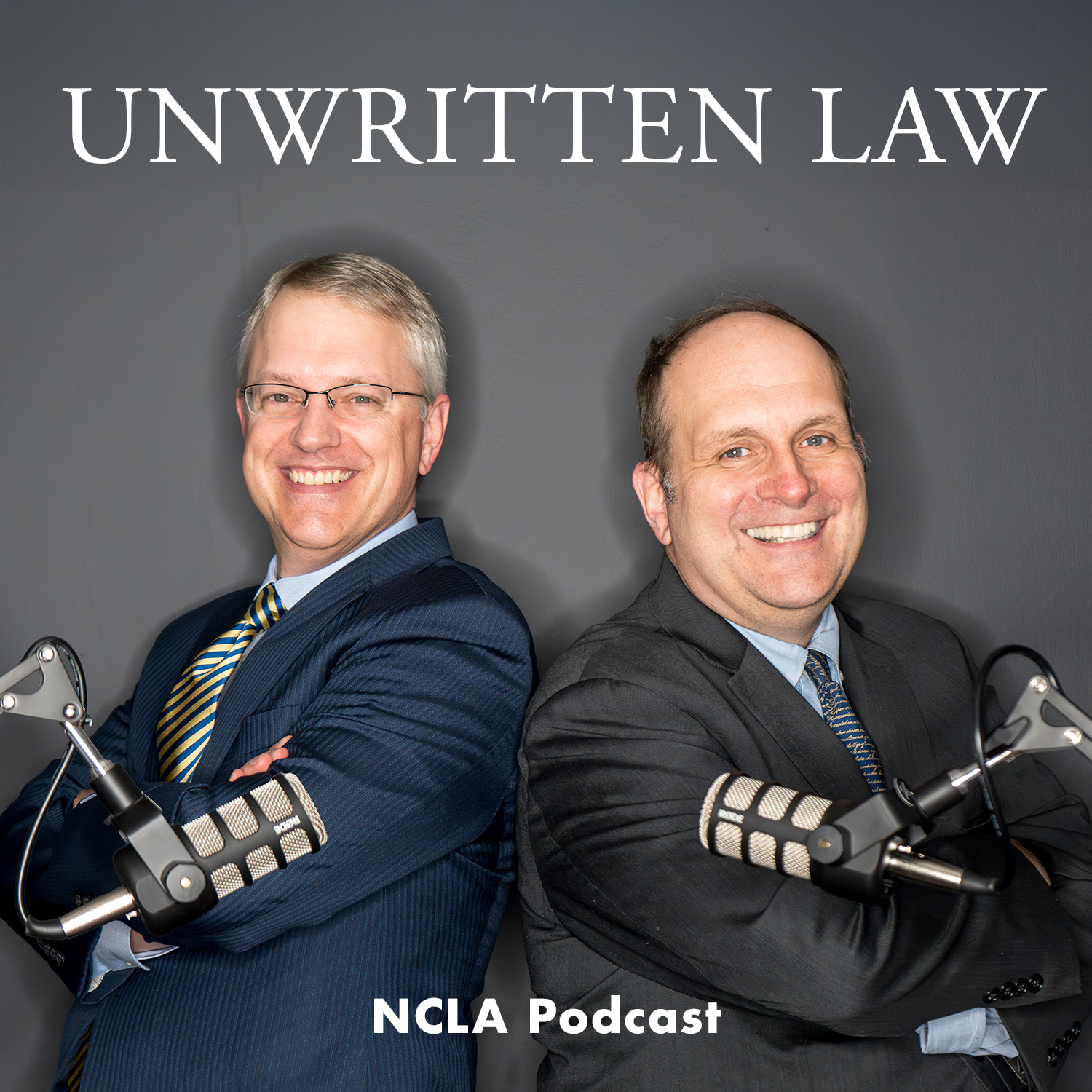
In this episode of Unwritten Law, NCLA Senior Litigation Counsel John Vecchione is joined by NCLA Senior Litigation Counsel Kara Rollins to discuss Sripetch v. SEC, a securities law case scheduled to be argued before the U.S. Supreme Court in April.
The case asks a critical question: must the Securities and Exchange Commission prove that investors suffered actual financial harm in order to obtain disgorgement in a civil enforcement action? John and Kara explain how recent Supreme Court decisions, including Kokesh and Liu, narrowed the SEC’s disgorgement authority while leaving this issue unresolved.
Transcript
John Vecchione: Welcome to Unwritten Law. This is John Vecchione. In Mark Chenoweth’s absence, I’m joined by Kara Rollins to discuss an important case in securities law that is going to be argued before the Supreme Court called Sripetch v Securities and Exchange Commission. Kara, welcome to the program.
Kara Rollins: Thank you for having me.
John Vecchione: Now, we have some interest in this case because we have the Spartan case. Also, I think both of us were involved in Amicus briefs in the Lou case and probably Kokesh, too.
f the SEC and FTC since about:John Vecchione: Exactly. All of these things are sort of swirling around in this case. Can you give our listeners, and I suppose viewers now, a thumbnail of what’s happening in Sripetch?
Kara Rollins: Yeah. What’s going on is this ongoing fight, or what we call disgorgement. Which is historically been described as historically not like in long length of equitable remedies, which goes back hundreds of years, but in more recent terms. It’s a variation of restitution. The idea that bad guys who do bad acts can’t keep the money that they gained. Their illicit gains, as it were. For a long time, both the FTC and the SEC looked at their penalty authority and went to court and said we have this general, broad equitable authority. We’d like restitution. We’d like disgorgement.
Over a series of three cases, probably within the past five to 10 years, the Supreme Court has cut back on that. In the FTC sense, they axed it altogether. They said, look, there’s nothing in the FTC Act that allows you to do this. Uniquely, in the SEC context, because the statute was written a little differently, they said, yes, disgorgement is available as an equitable remedy, another equitable relief. But what are the confines of that? One of the things we always talk about in the context of equity is that it cannot lend itself to penalty. That’s something the court has historically and consistently set.
John Vecchione: That was the Kokesh case. Kokesh was the case where they said we mean it on that. I think it was always the case, but the SEC had run wild for quite a while on this. In Kokesh, they said I’m sorry. But if it’s more than they took, for instance, it’s a penalty. You can’t do it through equity.
Kara Rollins: That went to the question of statute of limitations. Right. When can the SEC file? What you would see the SEC do is they sit on some of these cases for a very, very long time before they file. Generally speaking, there’s usually a five or six year statute of limitations for these types of cases. Otherwise, it’s a default. They would sit for seven or eight years. There are a lot of problems with that from a defense perspective. Minds fade. Subject to document retention go away. There are all kinds of problems. So, that’s Kokesh. Later on in Lou, then the question sort of comes up on this specific language in the SEC statute, where equitable relief is needed to be for the benefit of investors.
The question there is what is for the benefit of investors mean? The court again looked at what it did in Kokesh. Looked at what it did in other equitable context particularly with respect to restitution. They answered again somewhat to this question of where’s the line between equity and penalty. It laid out additional factors that lower courts should apply.
John Vecchione: Give us an example.
Kara Rollins: A good example of this is where the line is, there’s some language in Lou that says you have to establish fraud. It can’t be jointly and severally liable. Those are the big ones that kind of come up. Up until that point, joint and several liability was getting handed out in disgorgement all the time. Maybe somebody was doing something bad, but they shared a bank account. Now, you’re jointly and severally liable for that.
John Vecchione: Or even if they didn’t. For instance, the 98% bad guy has no money. The guy who looked the other way or did something minor was always trying to be roped in by the SEC. Lou left questions. One of the questions is who does the disgorgement has to be paid for. Right? So, the SEC thinks that it is the animus of all investors. So, as long as it’s getting the money, the investors are going to be happy.
Kara Rollins: The way they say this is if the money comes into the treasury. Well, we use it for educational programs and all this other sort of stuff. Traditionally, what you see in restitution cases is that it’s private people suing each other. They say, no, the money comes back to me. I would start a case for restitution for John. If I am correct, John pays me back the money he sort of illicitly gained from me.
John Vecchione: Oftentimes, I think my position is that there has to be a res. There has to be a bunch of money somewhere or a piece of property. A lot of this restitution and disgorgement is always because somebody had something. Then, the chancellor would give it to the person who rightfully should have it.
Kara Rollins: Right. That is sort of one of those things that’s developed. What the SEC has done with unjust gains is any money that you bring in as a result of your actions, minus regular business expenses, regardless of where the money goes in the end. SEC is fully capable. It has the ability. It regularly does, to some extent, identify harmed investors, set up investment funds for this money to then do disbursement. The reality is, when you look at the numbers, this is in their enforcement reports, the vast majority of money that comes in for disgorgement orders goes to the treasury. It does not go to harmed investors. It goes to the SEC or at least the United States coffers.
extent, tried to fix this in:It creates these problems because the question still hasn’t been answered of when it is a penalty. Or is it strictly a penalty if it goes to the treasury? Now, what Sripetch is trying to answer is the next question. Do you need to have an investor who had punitive harm? Not just that you’ve identified a harmed investor, but a harmed investor who actually suffered loss. I think it’s an important question. I think that it misses the first question of like if the money goes to the treasury, which my understanding and theory, that’s where this money was initially argued to go. Is that a penalty?
John Vecchione: Or does it count as disgorgement? It’s not really being disgorged.
Kara Rollins: It’s not really being disgorged. I think the case law is pretty clear from the Supreme Court that there’s a big question whether or not payment to the treasury actually fulfills equitable requirements.
John Vecchione: First of all, this came out of the Fifth Circuit.
Kara Rollins: No, this came out of the Ninth Circuit.
John Vecchione: The Ninth Circuit. All right. So, this came out of the Ninth Circuit. But I think there’s a circuit split.
Kara Rollins: Yeah. So, the courts have been grappling not just with disgorgement but sort of these post NDAA amendments. The First and Ninth Circuits have taken the side that you don’t have to show punitive harm. The Second Circuit, which is where New York is based, so a ton of Securities cases occur, has said you do need to show that an investor has suffered punitive harm. Then, the Fifth Circuit has done something completely different. They’ve said disgorgement is now legal, not equitable. So, you can ignore Lou, but you have to follow Kokesh. Then, the Eleventh Circuit in the Spartan case, which was just decided last month.
John Vecchione: Per curiam.
Kara Rollins: Per curiam. Many, many years of pending decision. That the statute does authorize disgorgement. That it can be paid to the treasury. Not because the statute says so, but because it would be more equitable to give it to the treasury. No other court has made that determination. It’s sort of like the Fifth Circuit’s decision. An outlier in the conversation. I think critically, from our perspective, what they missed is again this first question. When it goes to the treasury, is it operating as a penalty? Our answer has always been yes. At least in our case, the particular defendant, the SEC, never identified any harmed investor.
The one thing that the courts are consistently agreeing with, which is the first nine seconds, where these big splits have occurred, is that consistent with the Supreme Court. You need to provide a harmed investor. There’s got to be at least one guy out there that’s been harmed by what happened in order for disgorgement to occur. That’s why I think that I hope when the court addresses Sripetch, that it doesn’t sort of jump to this pecuniary harm problem. It actually talks about the penalty problem. Because they’re interwoven in a way that’s really important.
One of the things I think is somewhat problematic about the setup of Sripetch, but it’s not unique, is that the defendant in the case, Sripetch, actually consented on liability. We’ve certainly talked about this in the past. When you consent on liability with the SEC, or you consent on the whole thing, you get a gag. Which means you cannot contest or even dare besmirch the accusations and the complaint. So, the problem that happens when you get to the liability stage, and there’s a lot of courts that have come out and said this. They say, well, you consented to the fact that everything in the complaint is true, including that there were harmed investors.
So, you can’t come back at the liability stage and say there were no harmed investors. The SEC settles something over 90% of their cases. So, this comes up in a lot of frameworks. But it is sort of a problem from an equitable analysis point.
John Vecchione: If you still have an appeal, why don’t the lawyers just reserve that part of it?
Kara Rollins: I think that they think that they do. The problem is, once you get to the liability stage, what typically happens is there’s a case out of the southern district of New York where a judge admonished the defendant for daring to besmirch the complaint because they consented to it. If you say I’m going to consent to say liability, and we’ll talk about remedies later, one would think that you have not waived that.
John Vecchione: You’ve contested everything about the remedies. So, anything that’s in there. It should be in the agreement.
Kara Rollins: Yeah. But the way the courts have come out is, no, you said you agreed to what’s in the complaint, including the statements about remedies. It’s a problem. I think that it’s not fully lurking in this, but it is. I think that plays a role.
John Vecchione: That judge wasn’t Rakoff. I can tell you that. Go on.
Kara Rollins: What I think ends up happening is, look, even if the defendant in this case wins, right? They say you have to establish pecuniary harm. What does the SEC do in its complaints now? It alleges pecuniary harm. Investors have pecuniary harm. Boom. They fix their problem. The majority of the people are still going to consent. Then, you’re stuck with that line. That’s why, again, I think it’s really important that the court address the penalty problem.
John Vecchione: Also, the first interrogatory is identify all injured plaintiffs. All injured consumers. Anyway. What do you think is going to be decided in this case? What is the actual question that is being presented?
Kara Rollins: The actual question is whether or not disgorgement requires a proof of a truly harmed investor. An investor who’s been harmed in a monetary way. One of the things I think the SEC said at some point is, well, if we went down remand, we could prove that. If you could prove that on remand, why didn’t you prove it the first go around? I think that that’s what they’re trying to get at.
John Vecchione: Are they going to say they didn’t have to because he consented to it?
Kara Rollins: Probably. I have to review the briefs below, but I do think that is again part of the problem that’s here. I think one of the things that also comes up with disgorgement, again, the SEC takes a broad reading of disgorgement, is that, at least what the court has said in the past, is that it needs to be the product of fraud. The SEC also does a lot of paperwork violations. They seek disgorgement in that as well. Maybe the Fifth Circuit is ready to say this is legal but not equitable because there’s a lot of matching from the two columns going or mismatching from the two columns. One of the things that people always say is won’t this let fraudsters get away.
They’re going to get away with the money. That’s bad. Congress already thought that out. In the actual Civil Penalty Statute, this is 78-U. There’s three tiers. The calculation for civil penalty is either arranged or set by Congress up to a certain point for each of the three tiers. Or it allows for the penalty to be equal to the gross pecuniary gain. Let’s say you had a tier two violation. For an individual, I think that’s usually 100K. Let’s say your gross pecuniary gain as a result of your bad acts was $1 million. They can ask for $1 million. What the SEC typically does is they ask for maximum tier three penalties.
Then, the courts either grant that or they don’t. Then, they ask for disgorgement on top of that. They don’t want to risk getting less money into the coffers. That’s sort of one of the things when we talk about this. I haven’t seen anybody talk about the fact that Congress already thought through this pecuniary gain. Critically, those civil penalty monies go to the treasury. So, this disgorgement reading that some of them are adopting is actually duplicative of what’s already in the statute. You know as well as I do, one of the key things that you do when you do statutory construction, surplusage, I’m probably going to mispronounce.
John Vecchione: Surplusage.
Kara Rollins: Surplusage. It’s my Jersey accent. Your New York accent fares a little better on that one, but I think you took Latin at some point. That’s there. Congress thought what to do. What to do when there’s this huge great gain, and we can’t get it through an equitable remedy. They already figured that out years before the NDAA amendment went in. So, that’s also lurking in the problem as well.
John Vecchione: Well, it’s going to be interesting. I know that the business community and the security defense bar is looking at this very closely. We both think that Spartan would have been a better vehicle because we didn’t concede anything to anybody.
Kara Rollins: We didn’t concede. Well, there’s another case that’s pending at the Ninth Circuit that is also a good case. It’s a paperwork violation case. It’s SEC versus Barry, I believe. They conceded nothing either. So, I think that there were other options out there for the court to address, but this is what they’re going to address. I think the concern is, if they address it in this framework, does it actually solve all the problems?
John Vecchione: Sripetch had the circuit split, a multiple circuit split. It’s not just one way. They had the question presented. So, there you have it. This will be argued in April?
Kara Rollins: I think April 20th.
John Vecchione: It’ll be out by June, right?
Kara Rollins: June. It’s a quick one.
John Vecchione: All right. Well, we will continue to follow this not only for our clients but also for you. Thank you very much, Kara, for being on Unwritten Law.
Kara Rollins: Thank you.
John Vecchione: We’ll see you all next time on Unwritten Law.
[End of Audio]
Duration: 16 minutes