NY State Supreme Court Scraps Illegal Fine Against Trump
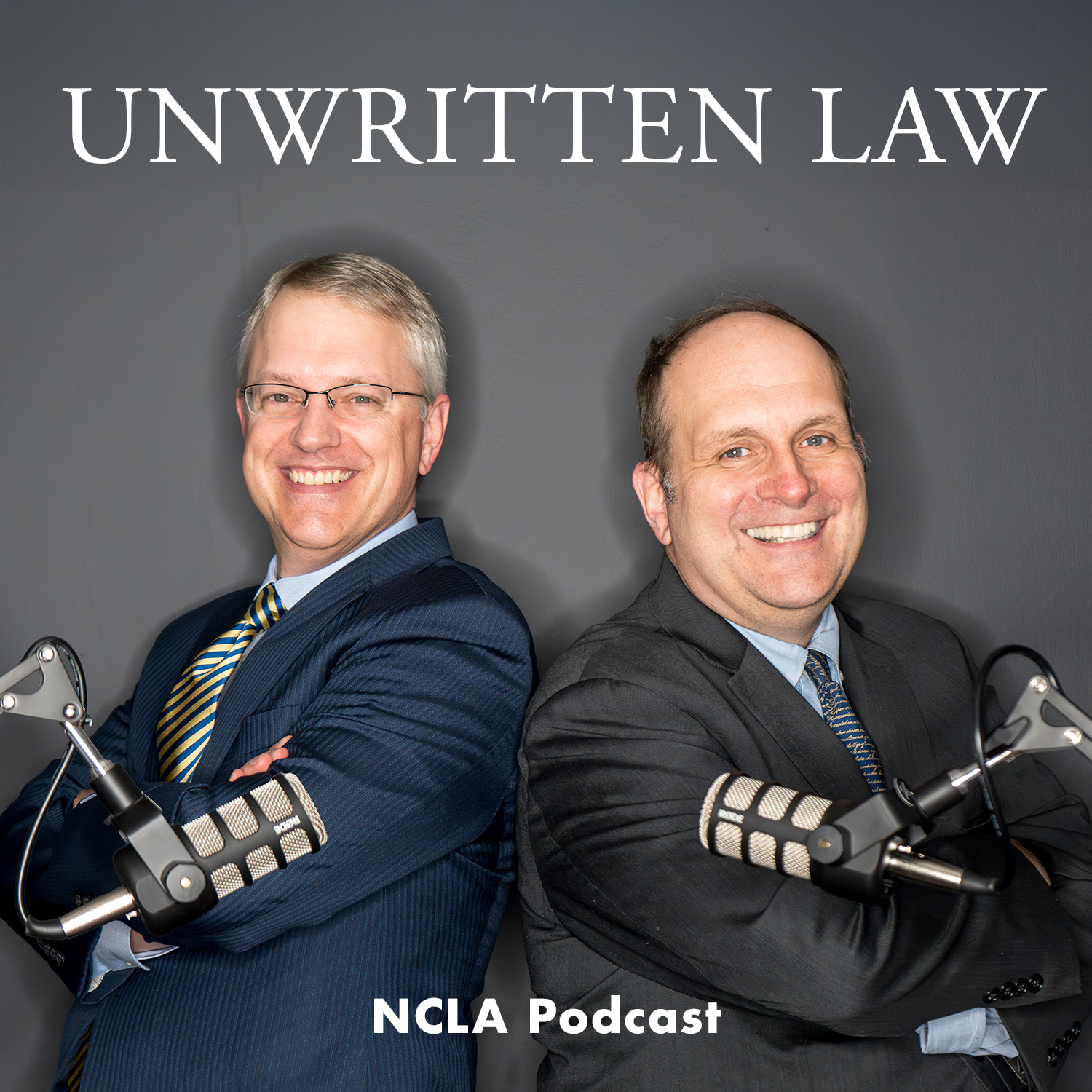
In this episode of Unwritten Law, hosts Mark Chenoweth and John Vecchione sit down with NCLA's Greg Dolin to unpack the New York Appellate Division’s 323-page ruling in the civil fraud case against Donald Trump. They break down why calling a half-billion-dollar penalty “disgorgement” doesn’t fly without ill-gotten gains, how the Eighth Amendment’s Excessive Fines Clause comes into play, and why the Attorney General’s theory stretches New York fraud beyond traditional reliance and harm.
The discussion also covers the opinion’s treatment of attorney sanctions, what could happen on further appeal, and what this all means for due process, economic liberty, and doing business in New York—especially under the capacious terms of New York Executive Law § 63(12).
Transcript
Mark Chenoweth: If you think that unwritten law doesn’t affect you, think again. Whether you’re a business owner, a professional, just an average citizen, you are unknowingly going to fall under vague and unofficial rules. And when bureaucrats act like lawmakers, they’re really restricting your liberty without the consent of the governed.
John Vecchioni: Welcome to Unwritten Law, this is John Vecchioni. I’m here, as usual, with Mark Chenoweth, and we are very pleased to have Greg Dolin with us, who authored an amicus brief in the People of the State of New York versus Donald J. Trump on behalf of NCLA. And we have just gotten a victory in that case, I would say.
Mark Chenoweth: Hot off the presses.
John Vecchioni: Although, it is 323 pages long and there are a lot of different opinions. But Greg, what can you tell us about this case?
Greg Dolin: Well, it is 323 pages long. I have not had a chance to read it all, because I got it about an hour before we started. This is the case where attorney general of New York, Letitia James, sued Donald Trump for alleged fraud in his transactions with Deutsche Bank and auto lenders, and where the trial court imposed a gargantuan $500 million penalty. So, half a billion with a B dollar penalty.
John Vecchioni: Top of the line ruling, though, that’s been struck.
Greg Dolin: Top of the line ruling, that’s been struck, and that, John, you mentioned, there’s multiple opinions, but on that point, the five judges are unanimous. So, for various reasons, but nobody thought that that was even remotely appropriate.
John Vecchioni: And I think I predicted this one. I said, “There’s no way that thing holds,” but the fact –
Mark Chenoweth: Well, that was a judgment especially for Election Day. I’ll put it that way.
John Vecchioni: Exactly, but so, for the – let’s just start with that. We had an argument of why that was no – that could not possibly be correct. What was our argument for NCLA?
Greg Dolin: So, on that point, and I would also just highlight that this was – that our client was not just NCLA. Professor Hamburger also in his individual capacity –
John Vecchioni: That is correct.
Greg Dolin: – was also an amicus in that briefing.
Mark Chenoweth: Yeah, on the same briefing.
Greg Dolin: On the same briefing. And he authored a good part of it. He’s a First Amendment scholar, and so he – and due process person, as well. In any event, our argument was that usually, this $500 million judgment was denominated disgorgement. And disgorgement usually means, you got something from me through some nefarious conduct.
Mark Chenoweth: Ill-gotten gains.
Greg Dolin: Right, and you now also have been enriched improperly, and so, disgorgement kind of returns your ill-gotten gains. The problem for the attorney general was that everyone, the bank president or loan officers, everyone testified that Donald Trump would have gotten the exact same deal even if, you know, she was writing an evaluation of his assets and not him. So, he’s gotten nothing extra. He’s gotten very favorable deals, but he would have gotten them anyways. So, there was nothing to disgorge, and this was, our argument with this was just a fine, called disgorgement, but it’s really a fine.
John Vecchioni: Penalty.
Greg Dolin: A penalty, which then runs headlong into Eighth Amendment prohibition on excessive fines, because again, half a billion dollars would that be.
Mark Chenoweth: When the testimony is that he would have gotten the same deal and didn’t have any ill-gotten gains, so it seems like a very, very much too high-penalty, under such circumstances.
John Vecchioni: And I will add, there’s no res. Normally, disgorgement is, you’ve taken some money. There’s a res, meaning a pile of money or stuff that can then be taken back. This was in the AMG case against the FTC. The SEC tried the same thing, and they were penalizing, the Supreme Court said, “You cannot call it disgorgement when it’s actually a penalty. That’s not allowed.”
And I’m very glad the Supreme Court said, the Appellate Court of New York said the same thing that the Supreme Court said. Because this is a dodge that the prosecutors always want to use when they want to take your money and not do everything they’re supposed to do to get it.
Greg Dolin: Right. I mean, you can call it whatever you want, but the fact that you called it something doesn’t mean it doesn’t get analyzed under appropriate constitutional provision. And as to the rest, the argument from the attorney general was that he got – his deal was too favorable, that because of his over-evaluation of his assets, he got a better rate, and so he should be forced to pay his actual rate. But again, it’s weird.
As I said before, usually, disgorgement means you took something from me, and so you give it back to me. The bank said, “No, we’re happy. There’s nothing that he took from us. We didn’t give him a cut.” So, it’s a $500 million to the state, which is a weird way to disgorge anything as well, further proving that it’s most likely a fine.
John Vecchioni: So, that was our argument and that prevailed. What were the other reasons why people said? Did they say it was excessive? Other than the Eighth Amendment, was there any other reason you saw that people were saying this was no good?
Mark Chenoweth: Can I just point out one other thing about the $500 million?
John Vecchioni: Go ahead.
Mark Chenoweth: Donald Trump relocated from the state of New York to the state of Florida, and I don’t think the state of New York was very happy about that for tax reasons, either. So this grab of $500 million, to me, was always a little bit suspicious just on that sort of ground alone. I know that wasn’t part of the case, I’m just throwing that out there for context.
Greg Dolin: No, but I think it’s very clear, to your point, Mark, I think it’s very clear in one, at least one judge on the appellate bench saw it that way, that this was not – so, this is how he ended his opinion. Because I read the first page and the last page before coming here, and this is how he ended his opinion. This was not about market hygiene, this was about political hygiene, to try to keep Donald Trump off the ballot, to try to get him basically painted as a fraudster who’s running for president, etc.
And you know, that attorney general of New York made no bones about it. She campaigned on getting Donald Trump. She said that her eyes are, quote, “Focused on Trump Tower.” There’s nothing wrong with having attorney generals elected. There’s nothing wrong with them prioritizing some cases over others, but this was very clear what was happening. And so –
Mark Chenoweth: Law affair.
Greg Dolin: Yeah, it was law affairs, because he moved, because he was running for president again, etc.
John Vecchioni: So, were there any other reasons why the fine was no good for the judges, besides Eighth Amendment, that you saw?
Greg Dolin: Again, I didn’t get a chance to read through all, but I think that was the main one. They said, “This is not really disgorgement, this is a fine,” and then analyze it as a fine.
John Vecchioni: Yeah, and I’ll be looking later if they used the New York State Constitution as well, which also has a prohibition. But I find that the New York appellate courts never seem to mention the New York Constitution, in my experience, but I’d like to see. I’d like to see if they did. Now, tell me, what else, anything else that we argued that’s in this case?
Greg Dolin: Yes. We basically brought three issues. One, we said that the entire, that the statute known as Executive Law 63(12) criminalizes conduct that goes way beyond common law fraud. Again, traditional common law fraud, I say something that’s not true, you rely on this, meaning that you make your decision based on that, and then you’re hurt by this. Again, everybody testified that no one relied on Donald Trump’s statement. These were sophisticated parties.
Mark Chenoweth: What a shock.
Greg Dolin: And it’s not because he’s known for making false statements, it’s because when you’re – look, when I apply for a mortgage or refinance my house, I can tell that my house, “Well, my house is worth five million dollars. Give me money.”
Mark Chenoweth: Yeah, the bank doesn’t believe you.
Greg Dolin: Bank doesn’t believe, bank is going to send appraisers. “Okay, it’s nice that you think it’s worth five million, but we think it’s worth $500,000.00. So, that’s the most we’ll give you, right?” And obviously, when you have even more sophisticated transactions, banks are going to do their due diligence, and they did, and they testified to that.
John Vecchioni: And this was Deutsche Bank, right?
Greg Dolin: It was Deutsche Bank.
John Vecchioni: This isn’t like, Moe’s Bank.
Greg Dolin: Right, right.
Mark Chenoweth: From Schenectady or something, yeah.
Greg Dolin: So, we argued that even if –
Mark Chenoweth: Sorry to our listeners in Schenectady.
Greg Dolin: And Moe. So, we said that, look, even if assuming that Donald Trump inflated his net worth, these were sophisticated parties, they did their own due diligence, so they could not have possibly relied, again, not because he is Donald Trump and he’s good or bad, it’s because this is just the way these transactions are run. They’re going to do their own due diligence and they’re going to make their own estimation of what he’s worth and what his credit risk is, etc.
John Vecchioni: Right, and so the background facts of how transactions are done kind of disproved the argument.
Greg Dolin: Right, and they tested, it’s not just kind of in a hypothetical. It’s not in a law school exam way, there was a –
Mark Chenoweth: There was testimony.
same thing about [inaudible] [:John Vecchioni: It’s the best, it’s the most expensive golf course, it has everything.
Greg Dolin: In and of itself, if nobody relies on it, it cannot be criminalized, and 63, Executive Law 63(12) does. The court of appeals, at least four justices seem to have rejected that point. So, we didn’t prevail on that one. And our third argument was that there was kind of the side issue, although a very important side issue, the trial court, which weirdly enough, in New York, is called the Supreme Court.
John Vecchioni: Yes.
Greg Dolin: So, one of those weird states. The Supreme Court is –
John Vecchioni: It’s very Trumpy, actually. “We’re not the trial, we’re the best, we’re supreme. We’re completely supreme. There’s nothing above us.”
Greg Dolin: So, it’s a very weird thing. People get very confused. New York lowest level court is supreme, and then highest court is court of appeals, and then the intermediate one is Supreme Court Appellate Division. So, that’s where we are now, or just ended being there.
John Vecchioni: And Supreme Court Appellate Division is a funny lure too, when you think about it, but go ahead.
Greg Dolin: It’s a very odd nomenclature, but in any event, the Supreme Court, the lower level court, sanctions attorneys. It was not huge sanction, it was only like $7,500.00 or so per attorney for allegedly making frivolous arguments, but it’s not the amount of money. It’s now this attorney forever have to say, “Have you ever been sanctioned?”
It’s a stain on professional reputation for being nothing more than zealous advocates and for raising – especially New York is kind of, it’s a very, the procedure’s somewhat convoluted, so if you don’t make your objections often enough, like, waive-able, and so, it’s one of those things that you really want to pound the table saying, “No, no, I really object.”
Mark Chenoweth: Strenuously.
n: [Inaudible – crosstalk] [:John Vecchioni: And I want to, because when Demi Moore says, when she’s overruled and then she says, “I strenuously object,” and the judge says, “Well, that’s not a thing. I’ve already ruled, right?” But he didn’t sanction her. And when I read the facts of this, I’m like, “Look. These lawyers don’t know what the appellate court’s going to do.”
They made the argument again, they made the argument and they said that argument had been rejected by a previous appeal, but you don’t know whether some court’s going to say – I mean, in the Fifth Circuit, I worry all the time, particularly, and the state courts, you don’t know, because the justice department and the prosecutors always say you waived. How many times in our cases have we got a brief –
Mark Chenoweth: Every time, seems like.
John Vecchioni: – from them that says, “We waive something,” when I can cite to two pages in lower court stuff.
Mark Chenoweth: And they never get sanctioned for that.
John Vecchioni: Right. They never do, and yet, and yet, these guys were sanctioned for doing something that I, for our listeners who aren’t lawyers, I think is so common. You got overruled, you make the argument to preserve it so that if something changes or the state of the law changes, you still have it and your client doesn’t say, “Hey, why didn’t you make it again?”
Mark Chenoweth: Well, plus our amicus brief, if I remember correctly, Greg, we say not only was the argument reasonable, we think it’s right. Like, we think they should prevail on appeal and on this argument.
Greg Dolin: At least one justice agreed with us, right? So, almost by definition, that cannot be frivolous.
Mark Chenoweth: Justice Friedman, I believe it was.
Greg Dolin: Justice Friedman, right, yeah, he’s a minority, but even if you have one justice on an appellate bench saying, “No, you were right,” that cannot be a frivolous argument.
John Vecchioni: I agree.
Greg Dolin: And so, the court, fortunately, was unanimous on this point as well. They set aside sanctions as well.
John Vecchioni: Yeah, and I thought that was very good, because you think that this sort of thing might get lost in the wash of how many issues there were, and I think that was a fair outcome.
Mark Chenoweth: Well, and I hope that the state of New York does not appeal that portion of the decision, at least. I mean, that would be highly unfortunate for them to continue to press that.
John Vecchioni: And I think, I’ll tell you this. You think there’s going to be an appeal to this?
Greg Dolin: Almost certainly, in part because the way the judgment, or in the language of New York, decretal came out, it’s very bizarre. If you look at what the justice actually thought about the proceedings below, three justices thought that the trial was improper. One thought it was completely improper because the attorney general improperly brought the case and should not be reheard, it should be dismissed in its entirely.
Mark Chenoweth: And that was Friedman.
Greg Dolin: That was Justice Friedman. Two justices, Justice Higgin and I think Rosado –
John Vecchioni: Yeah.
Greg Dolin: – thought that the attorney general had the right to bring this case, it was fine, but the trial was improperly run. There were mistakes, and should be basically rerun and limited to certain facts. So, at least three justices said that the judgment below should be thrown out, either completely or in part. And then two justices thought that the trial, the attorney general was okay to bring the case, the trial was fine except for the excessive penalty, and so, strike the penalty and affirm the rest.
So, one would think, given the majority thought that trial was not fine, the whole thing would be vacated. But because nobody could really agree with anyone, instead, to allow for an appeal and to kind of, to ensure finality, the four justices, the two who thought the trial was fine and two who thought the trial was not fine, actually said, “For the purposes of entering an order,” that decretal, “we will agree to affirm, minus the penalty and minus the sanction, so that both sides can take appeal to the Supreme Court.” I imagine Letitia James is going to take – or court of appeals.
John Vecchioni: Yeah.
Greg Dolin: So, Letitia James is going to appeal the loss of the monetary policy, because that was her crown jewel. I imagine Donald Trump is going to take exception to being called a fraudster, especially given that there was no common law fraud.
John Vecchioni: He’s going to appeal the injunctive part.
Mark Chenoweth: Well, and he can appeal their failure to side with him on the interpretation of the executive law issues, right? I hope he does, because I think that’s, in terms of future litigants, I think that’s the most important piece of this case.
Greg Dolin: Exactly, and so, I think that there will be an appeal. I think the case is sufficiently important that, although court of appeals doesn’t have to hear it, it’s their choice which appeal they do and don’t hear. I would put serious money on saying they’re going to take the case.
John Vecchioni: I think so too, but I will say, there’s one thing that’s bugging me about the court of appeals. That is that –
Mark Chenoweth: Can I just weigh in on that one?
John Vecchioni: Go ahead.
Mark Chenoweth: I think it depends. I think you’re right, because I think Letitia James will seek an appeal, and then I think that they’ll get it. If for whatever reason the attorney general were to make a decision not to seek an appeal, because maybe she thinks I’m not going to win this $500 million point and I want to keep the judgment against Trump that he’s a fraudster, and then if she doesn’t appeal and only Trump appeals, I could see the court of appeals not taking the case.
John Vecchioni: I can, and this is where I was going to go with this, because the recent things have happened in New York on whether you get to stay on the court of appeals or not, Hochul put someone on who ruled that, in an abortion case, that the abortion rights organization had a right to do this or that. It was not about whether it’s going to be abortion in New York, which is the No. 1 place for abortions.
So, but that one thing got him not reconfirmed in the Senate, right? He ruled the wrong way. So, if you’re sitting there and you want, because I’ve always said, then your courts do want to be the place for contracts and a place for business, and that means you have to rule that words mean things and they don’t mean other things. It’s why people choose New York law.
They might not want to do anything to upset that and also not have to rule in a way that might upset the senators in New York. So, I hope that’s not the case, but I don’t throw – five years ago, I would’ve said that was nonsense, and I don’t say that anymore.
Greg Dolin: Well, the other way of doing it is that, again, if the judges really want to play politics, and I always am loathe to say that they do, but sometimes, let’s be honest, they do, is, you can take the case, sit on it for a while, I mean, even the court of appeals, that’s generally known as this particular appellate division of the Supreme Court, generally known to be pretty fast. It took them a year to issue something. I mean, granted, 322 – it’s a page a day, so.
Mark Chenoweth: That’s alacrity where I come from.
Greg Dolin: So, the injunctive relief is going to basically run out by its own terms. I think Donald Trump is barred for two years, I think a couple people barred for three years, so some of it, so basically, they might take it, say, “Well, we’re not going to affirm or reverse the injunctive relief, because that’s moot, but we are going to affirm the denial of the, the striking down of the penalty,” and then just kind of led the rest. They can say, “Look, we can vacate the judgment or not.” So, there’s a way kind of to skin that cat where everybody goes home sufficiently unhappy.
Mark Chenoweth: Is it worth taking the case if that’s what they’re going to do, though? Because you could just not take the case and essentially reach the same result.
Greg Dolin: You could, right? But you could, like I said, there’s multiple ways of skinning that cat where everybody kind of goes home sufficiently both happy and unhappy. But I think for our purposes, NCLA is the filers of amicus brief, I think we won on the big points, because the – precisely because the Letitia James lost interpretive points. Her, she doesn’t want, she doesn’t care if Donald Trump is barred from running business in New York, especially now that he’s president. That was not the goal. The goal was both to politically punish him and maybe, if not bankrupt him, put a significant dent into his –
John Vecchioni: Right.
Greg Dolin: And now that’s gone. He was reelected and he doesn’t have to pay that penalty.
Mark Chenoweth: And Trump cares about the money, and he’s not going to be paying the $500 million now, so he’s going to look at this as a big victory, I would think.
Greg Dolin: Right, so, but I think for our purposes, for NCLA purposes, for due process thing, kind of, you don’t go after the attorneys. You don’t sanction them, even for fairly measly $7,500.00 penalty, because it’s reputational, and you don’t try to bankrupt a defendant because you don’t politically like him. So, we would’ve liked to have a broader victory, but I think this is pretty good.
John Vecchioni: And I’ll say, and the Eighth Amendment stuff is important as well, because that excessive fines is there for a reason. I think it’s this reason.
Mark Chenoweth: I agree with all of that. I will put a plug in, again, for the executive law. For folks who don’t understand, this is a law that no other state has. This is a very unique New York kind of law, and it has been abused repeatedly by Eliot Spitzer, it’s been abused by Letitia James. It’s a problem.
John Vecchioni: It’s Chekhov’s gun.
Mark Chenoweth: And it needs to go away.
John Vecchioni: Of law. It’s sitting there on the mantelpiece, and it’s always pulled out when they want to have a denouement of whatever political thing they’re doing.
Greg Dolin: I mean, I would say, like, you know, a very fainthearted court would – I wouldn’t call it defense of this law, but if it were construed to allow the attorney general to go after someone who commits an act that would qualify, that would meet the elements of common law fraud, that’s not a bad law. Like, you want the attorney general to protect public interest, especially when somebody’s defrauding a small mom and pop shop that doesn’t have their wherewithal to go after them.
But the problem is, because it doesn’t have those elements, they, despite the courts saying, “Well, it criminalizes more than just falsity alone,” but in reality, it does. Just falsity alone. That’s the problem. It’s not the problem that attorney general can enforce public interest. It’s how broadly the law is written and how broadly it has been interpreted.
Mark Chenoweth: That’s right, that’s right. And it’s been wielded, there’s also provisions in it that if you’re being charged under that law, then you’re not allowed to talk about as, these are sort of, they can kind of put pressure on you silently where you can’t be fighting back in the courts, or not in the courts, I mean in the court of public opinion and so forth.
So, there’s lots of elements of it that are just really nasty, and I can’t think of a case that couldn’t have been won with other, regular laws. I mean, there’s nothing good that’s being lost if this law goes away or if a version of it that comports with the common law were to replace it, whereas there’s a whole bunch of, gosh, nasty behavior by state AGs in New York that militate for doing away with it.
Greg Dolin: But it tells you a lot that Donald Trump, for all of Letitia James’ chest-pounding how he’s a fraudster and how he’s screwing up New York real estate and financial markets and all these things, that she didn’t charge him with common law or even statutory fraud. That tells you a lot, that she had to resort to this law where her burden of proof is so much lower.
Mark Chenoweth: Agreed.
John Vecchioni: Well, I think that this is a noteworthy amicus victory, and thank you for being with us, Greg. We will read the opinion, and if we have further notes on it, you will hear from us. So, thank you all for listening to Unwritten Law.
Mark Chenoweth: As we like to say here at NCLA, let judges judge, let legislators legislate, and stop bureaucrats from doing either.
[End of Audio]
Duration: 22 minutes